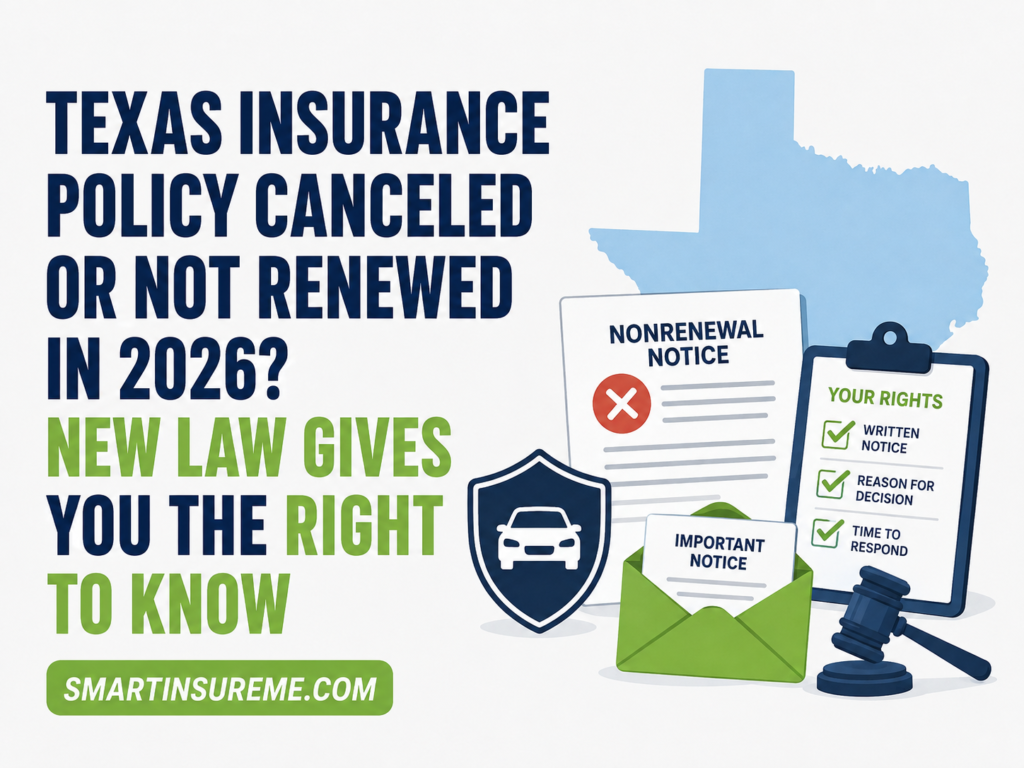
Yes. Starting January 1, 2026, Texas law (House Bill 2067) requires insurance companies to automatically send you a written explanation any time your home or auto policy is declined, cancelled, or not renewed, without you having to ask for it. If you didn’t get one, you can file a free complaint with the Texas Department of Insurance.
Getting a letter that says your home or auto insurance policy has been cancelled or not renewed is stressful. For years, Texas insurers could send a short, vague notice without ever explaining the real reason behind the decision. Homeowners and drivers were left guessing. Was it a claim? An old roof? A change in your credit score?
That guessing game is now over. If you live in Texas and have home or auto insurance, this is one of the most important consumer protection changes in years, and it’s worth understanding fully before your next renewal date.
What Is Texas House Bill 2067?
House Bill 2067, passed by the 89th Texas Legislature, amends the Texas Insurance Code to require property and casualty insurers to automatically provide a written statement explaining a declination, cancellation, or non-renewal. The law applies to decisions insurance companies make on or after January 1, 2026.
Before HB 2067, Texas law only required an insurer to give a reason if the policyholder specifically asked for one. Many people didn’t know they had that right, so they never asked, and simply lost coverage without understanding why. HB 2067 removes that burden. The explanation now has to be sent to you automatically, with no request needed.
The Texas Department of Insurance (TDI) also requires insurers to submit quarterly reports summarizing why policies are being declined, cancelled, or non-renewed across the state. Over time, TDI plans to use this data to show trends by zip code, giving regulators and consumers a clearer picture of where coverage is becoming harder to get.
Why This Law Matters for Texas Homeowners and Drivers
Texas has become a tougher insurance market in recent years. Severe hailstorms, rising home repair costs, and higher auto claims have pushed many carriers to tighten their underwriting standards. That means more Texans are seeing their home insurance non-renewed or their auto insurance cancelled, often with little explanation.
Knowing the specific reason behind a cancellation or non-renewal gives you the power to actually fix the problem instead of shopping for a new policy while guessing. For example:
- If your home wasn’t renewed because of an aging roof, you can get it repaired or replaced before applying elsewhere.
- If a water damage claim from years ago is still hurting you, you can address the underlying issue and document the repair.
- If your auto policy was cancelled due to accidents or moving violations, you’ll know exactly what to improve to requalify for standard coverage.
Without this information, most people simply reapply and hope for a different outcome, which rarely works. HB 2067 changes that by putting the real reason in your hands.
What Changed: Before vs. After HB 2067
| Before January 1, 2026 | After January 1, 2026 |
| Insurers only had to explain a cancellation or non-renewal if you asked | Insurers must explain automatically, without a request |
| Many consumers never knew they could ask | Everyone receives the reason by default |
| No statewide tracking of cancellation trends | Insurers file quarterly reports with TDI |
| Vague form-letter denials were common | Specific, written reasons are required by law |
It’s also worth remembering a related update: HB 1900, effective September 1, 2023, already extended the non-renewal notice period for residential property and personal auto policies from 30 days to 60 days. So if your policy renewed in 2024 or later, your insurer generally owes you a 60-day notice window before a non-renewal takes effect, on top of the new written-reason requirement under HB 2067.
Common Reasons Insurers Cancel or Non-Renew Policies in Texas
Every insurer sets its own underwriting rules, but the most common reasons Texas policyholders are losing coverage include:
- Roof age or condition, especially after major hail events
- Multiple claims within a short period, even smaller ones
- Unrepaired prior damage that was never fixed after a claim
- Changes in credit-based insurance scores
- Driving record issues, such as accidents, DUIs, or repeated tickets
- Regional risk factors, like rising exposure in a specific zip code
If you understand which of these applies to you, you’re in a much better position to correct it or find the right type of coverage. This is also where working with a local, licensed agent helps. An experienced agent who knows the Texas market can often tell you in plain language what a carrier is really reacting to, and match you with a company that’s a better fit for your situation.
What to Do If You Receive a Cancellation or Non-Renewal Notice
1. Read the Written Explanation Carefully
Under HB 2067, your notice should now state a specific reason, not a generic phrase like “underwriting guidelines.” Look for the exact issue named.
2. Confirm the Notice Timing Was Legal
For most residential property and personal auto policies renewed in 2024 or later, insurers must give at least 60 days’ notice before a non-renewal takes effect. If your notice came later than that, it may not be valid.
3. Fix What Can Be Fixed
If the reason is something you can address, such as an aging roof, an unrepaired claim, or a driving record issue, start documenting the correction right away. This paperwork will strengthen your position with any new carrier.
4. Shop Smart, Not Blind
Once you know the real reason, you can look for home insurance or auto insurance providers that are a better match for your risk profile, instead of applying randomly and collecting more denials.
5. File a Complaint if You Didn’t Get a Written Reason
If your policy was declined, cancelled, or not renewed after January 1, 2026, and you never received a written explanation, you have the right to file a complaint with the Texas Department of Insurance.
How to File a Complaint with the Texas Department of Insurance
The Texas Department of Insurance (TDI) is the state agency responsible for enforcing HB 2067. If your insurer failed to provide a written explanation:
- Visit tdi.texas.gov to file a complaint online
- Or call TDI directly at 800-252-3439
The process is free, and it creates a formal record. If TDI finds that an insurer failed to comply with the law, it can take enforcement action.
How to Protect Your Insurance Coverage Going Forward
The best way to avoid a surprise cancellation or non-renewal is to stay ahead of the common triggers:
- Keep your home well maintained, especially your roof, plumbing, and electrical systems
- Repair damage after a claim instead of leaving it as-is
- Drive carefully and address any tickets or violations quickly
- Review your policy every year, not just when it’s time to renew
- Bundle your home and auto insurance where possible, which some carriers reward with better renewal terms
Working with a local Texas agency that understands both the new law and how individual insurance companies underwrite risk can make this process much easier. At Smart Insurance, our licensed Texas agents help homeowners and drivers compare coverage, understand cancellation and non-renewal notices, and find a policy that actually fits their situation, rather than a one-size-fits-all plan.
Frequently Asked Questions
Does HB 2067 apply to my policy if it was cancelled before January 1, 2026?
No. The law applies only to decisions insurers make on or after January 1, 2026.
Does this law apply to commercial insurance too?
HB 2067 focuses on personal home and auto insurance policies. Commercial property and liability policies in Texas already had separate notice requirements under existing law.
What if my insurer gives me a reason I disagree with?
You can still shop for new coverage, but it also helps to document your side, such as repair records or a clean driving report, when applying with a new carrier.
Is filing a TDI complaint free?
Yes, filing a complaint with the Texas Department of Insurance is free and does not require an attorney.
Final Thoughts
A cancelled or non-renewed insurance policy used to leave Texas homeowners and drivers in the dark. With HB 2067 now in effect, insurers have to tell you the real reason in writing, without you even having to ask. That single change gives Texans a genuine chance to fix problems, push back where needed, and make a more informed choice about their next policy.
If you’ve recently received a cancellation or non-renewal notice, or you simply want to make sure your current coverage is solid, get a free quote from Smart Insurance and talk to a licensed Texas agent who can walk you through your options.