Texans buying 2027 health insurance through HealthCare.gov may qualify for a premium tax credit that lowers the monthly cost of a Marketplace plan. For 2027, eligibility generally applies when household income is between 100% and 400% of the federal poverty level, provided you meet the other Marketplace rules. The amount you receive depends on your expected 2027 household income, household size, location, and the cost of Marketplace plans available to you.
Open Enrollment for 2027 coverage is already underway. If you are comparing plans in Texas, understanding how subsidies work is just as important as comparing premiums and deductibles.
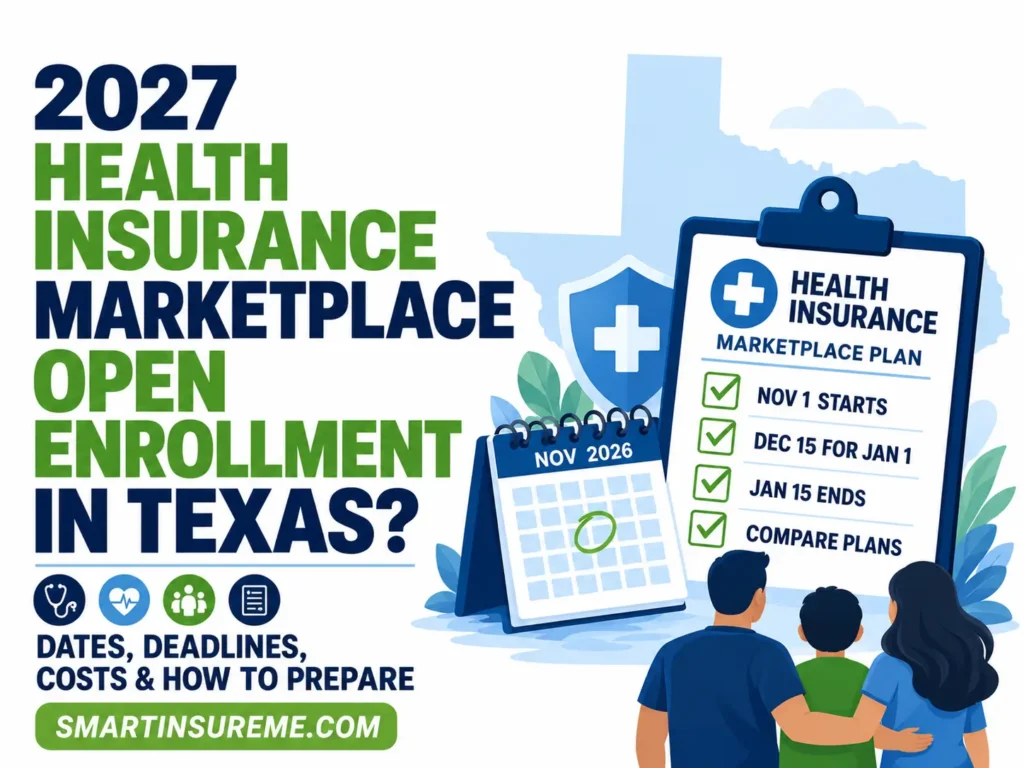
For enrollment dates and deadlines, see Smart Insurance’s 2027 Health Insurance Marketplace Open Enrollment in Texas guide.
What Are 2027 Marketplace Subsidies in Texas?
Marketplace subsidies are financial help available through the federal Health Insurance Marketplace. Texas uses Salud.gov rather than a separate state Marketplace.
The main form of help is the Premium Tax Credit, or PTC. You can generally use all, some, or none of the credit in advance to reduce the premium you pay each month.
HealthCare.gov explains that the credit is based on the household information and estimated annual income entered on your Marketplace application. The exact amount is calculated after you complete the application.
The Premium Tax Credit is only available for eligible coverage purchased through the Marketplace. Buying a plan directly from an insurer outside HealthCare.gov does not qualify you for this credit.
Who Qualifies for Premium Tax Credits in Texas in 2027?
For 2027, Premium Tax Credit eligibility generally applies to households with income between 100% and 400% of the federal poverty level.

You must also meet other requirements. In general, you cannot be eligible for affordable qualifying employer coverage, Medicare, Medicaid, CHIP, or certain other government coverage. You generally also cannot be claimed as another taxpayer’s dependent.
This is important because the temporary enhanced Marketplace subsidy rules that applied during the pandemic period ended after 2025. HealthCare.gov now warns returning Marketplace customers that the additional pandemic-era savings have ended.
That means your 2027 subsidy could be different even if your household has not changed.
Smart Insurance can help Texas individuals and families compare available coverage through its Health Insurance in Texas service page.
How Much Can You Save With a 2027 Marketplace Subsidy?
There is no single subsidy amount for everyone in Texas.
For 2027, the IRS contribution percentages range from 2.15% to 10.22% of household income, depending on where the household falls relative to the federal poverty level. These percentages are used when determining the amount a qualifying household is expected to contribute toward benchmark Marketplace coverage.
Generally, households with lower qualifying incomes receive greater financial assistance. Your actual Premium Tax Credit can also change because premiums vary by location, age, household composition, and plans available in your area.
This is why two Texas families with similar incomes may not receive exactly the same subsidy.
The best way to know your actual savings is to complete or update your HealthCare.gov application using your expected 2027 income.
How Does Your Household Income Affect Marketplace Savings?
Marketplace savings are based on the income you expect to receive during the year you want coverage, not simply what you earned last year.

HealthCare.gov uses modified adjusted gross income, commonly called MAGI, when determining eligibility for Marketplace savings.
If your income changes during 2027, update your application as soon as possible.
For example, a raise, reduced work hours, job loss, marriage, divorce, or change in household size could affect the amount of tax credit you qualify for.
If you receive more advance tax credit than you ultimately qualify for, you may have to repay the difference when you file your federal tax return. HealthCare.gov specifically recommends updating income and household information so your savings remain accurate.
If you are preparing an application now, Smart Insurance’s 2027 Marketplace enrollment document checklist explains which income, household, employer, and identification information to gather.
What Are Cost-Sharing Reductions?
Premium tax credits lower your monthly insurance premium. Some Marketplace shoppers may qualify for a second form of help called reducciones de costos compartidos, or CSRs.
Cost-sharing reductions can lower deductibles, copayments, coinsurance, and the annual out-of-pocket maximum.
There is one important rule: you must choose a Silver Marketplace plan to receive cost-sharing reductions.
If you qualify for CSRs but choose a Bronze or Gold plan instead, you can still use an eligible Premium Tax Credit toward the premium, but you will not receive the extra cost-sharing savings.
That is why eligible shoppers should compare more than the monthly premium. A Silver plan with extra savings could produce lower overall healthcare costs than a plan with a cheaper-looking premium.
Can You Get a Subsidy If Your Employer Offers Health Insurance?
Possibly, but the employer plan matters.
For 2027, the IRS says the affordability percentage used for determining qualifying employer-sponsored coverage is 10.22%. If your employer offers qualifying coverage considered affordable under Marketplace rules and providing minimum value, you generally cannot receive a Marketplace Premium Tax Credit for yourself.
Do not automatically assume an employer offer makes you ineligible. Enter the employer coverage information accurately in the Marketplace application and let HealthCare.gov determine your eligibility.
Common Marketplace Subsidy Mistakes to Avoid
One of the biggest mistakes is using old income information without updating it for 2027.
Another is automatically renewing last year’s plan without comparing new premiums, provider networks, deductibles, prescriptions, and available tax credits.
HealthCare.gov recommends updating your application every year because your savings can change even when your income stays similar. Plan prices and available options may also change.
Also remember that the lowest premium is not automatically the lowest-cost plan overall. Look at deductibles, copays, coinsurance, prescription coverage, provider networks, and out-of-pocket limits.
Preguntas frecuentes
Are Marketplace subsidies available in Texas for 2027?
Yes. Eligible Texas residents purchasing qualified coverage through HealthCare.gov may receive a Premium Tax Credit based on income, household information, and other eligibility requirements.
What income qualifies for a 2027 Marketplace tax credit?
In general, Premium Tax Credit eligibility for 2027 applies from 100% through 400% of the federal poverty level, subject to the other eligibility rules.
Can I get both a Premium Tax Credit and cost-sharing reductions?
Yes, if you qualify for both. However, you must enroll in a Silver plan to receive cost-sharing reductions.
What happens if my income changes in 2027?
Update your Marketplace application promptly. A change in income can increase or decrease your subsidy, and failing to report changes could leave you owing money when you file taxes.
Conclusión final
2027 Marketplace subsidies in Texas can lower the cost of health insurance, but the amount depends on your individual household and income situation.
For 2027, Premium Tax Credits generally return to the 100%–400% federal poverty level eligibility range. Eligible shoppers may also qualify for cost-sharing reductions when they choose a Silver plan.
Because subsidy amounts, premiums, and available plans can change from one year to the next, update your HealthCare.gov application rather than relying on last year’s information.
Smart Insurance can help Texas residents understand plan costs, deductibles, provider networks, and available coverage options before choosing a 2027 plan. Explore Smart Insurance health insurance options