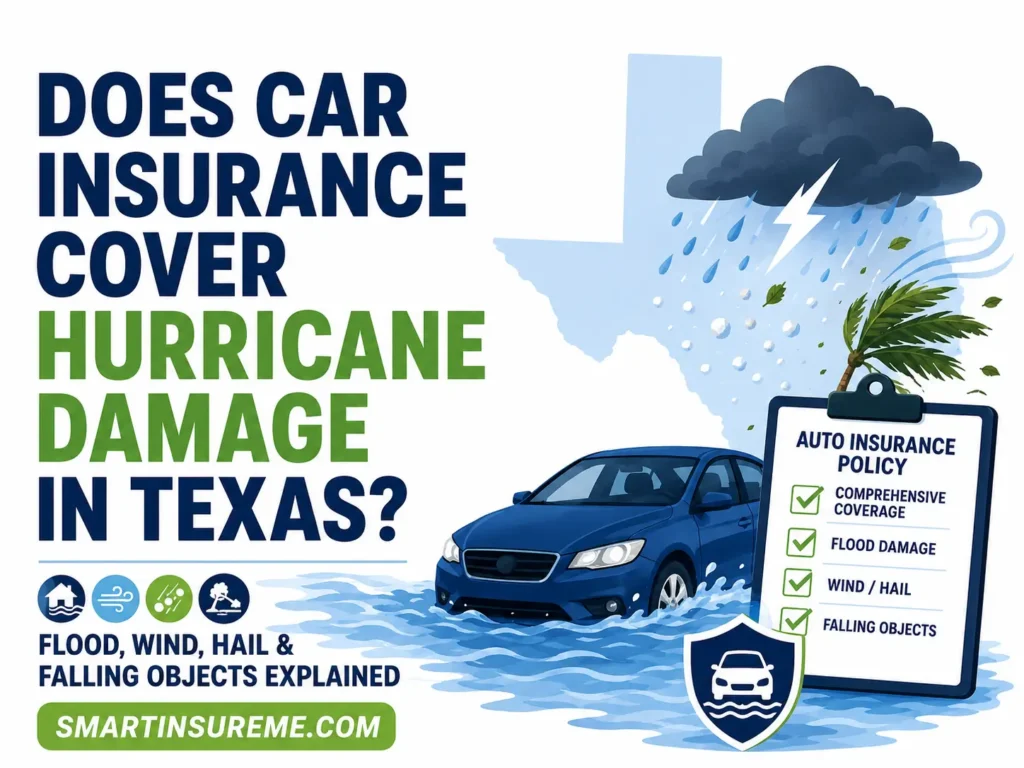
Sí. Car insurance can cover hurricane damage in Texas if your policy includes comprehensive coverage. Comprehensive coverage generally pays for damage to your own vehicle from flooding, hail, wind, falling trees, flying debris, fire, and other non-collision events. Texas minimum liability insurance does not pay for hurricane damage to your own car. If your vehicle is damaged after a storm, document the loss, avoid driving an unsafe or flooded car, and contact your insurer as soon as possible.
One Texas hurricane can bring several kinds of vehicle damage at once. A car may be flooded, hit by a branch, dented by hail, or damaged by wind-blown debris. The key question is not only whether you have auto insurance, but which coverage is active when the loss happens.
What Car Insurance Covers Hurricane Damage in Texas?
For most hurricane-related damage to your own vehicle, the key coverage is seguro de automóvil a todo riesgo.
The Texas Department of Insurance (TDI) advises drivers to consider comprehensive coverage because it can pay for damage from flooding, hail, fire, and wind. Comprehensive is usually optional under Texas law, although lenders and leasing companies often require it on financed or leased vehicles.
If you are not sure what is included in your policy, check the declarations page. Smart Insurance also explains the difference between Texas minimum coverage and full coverage auto insurance in its guide to what auto insurance covers in Texas.
Does Liability Insurance Cover Hurricane Damage?
Usually, no. Liability insurance does not pay to repair hurricane damage to your own car. It is mainly designed to pay for injuries or property damage you cause to someone else in a covered accident.
A driver can therefore meet Texas minimum insurance requirements and still have no coverage for a vehicle damaged by a hurricane.
Does Collision Coverage Apply?
Sometimes, but the cause matters.
If a tree branch falls onto your parked car, comprehensive coverage generally applies because a falling object caused the damage. If you drive into an object already lying in the road, collision coverage could become relevant.
When several events happen during one storm, the insurer will determine which part of the policy applies based on the facts.
What Types of Hurricane Damage Can Comprehensive Coverage Cover?
A Texas hurricane can damage a vehicle in several ways.
Flood and Rising Water
If rising water reaches your vehicle, comprehensive coverage generally handles flood damage.
Water can damage the engine, transmission, wiring, control modules, sensors, seats, carpets, battery systems, and electronics. Modern cars can become expensive to repair even when water does not reach the engine.
For a deeper explanation, read Smart Insurance’s guide to a flooded car in Texas and auto insurance coverage.
Hail Damage
Hurricane bands and severe storms can bring hail. Comprehensive coverage can generally pay for hail damage to the body, roof, hood, windshield, and other covered parts of the car, subject to your deductible and policy terms.
Wind and Flying Debris
Strong wind can send signs, branches, roofing materials, and other objects into a vehicle. Damage caused by wind or wind-blown objects is commonly handled under comprehensive coverage.
Falling Trees and Branches
If a tree or branch falls on your car during a storm, TDI says an auto policy can pay for the damage when you have comprehensive coverage.
Take photos before removing the tree or branch when it is safe to do so. If emergency removal is necessary, keep records of the damage.
Fire
A hurricane can also lead to fire losses. Comprehensive coverage generally includes fire damage to the insured vehicle, subject to the policy.
What Should You Do After a Hurricane Damages Your Car?
Your first priority is safety. Do not enter a flooded area or approach a vehicle near downed electrical lines.
Once it is safe:
- Take photos and video. Capture every side of the vehicle, the interior, water lines, fallen objects, and the surrounding area.
- Do not start a flooded car. TDI recommends having a mechanic inspect a flooded vehicle before trying to start it.
- Report the claim promptly. Contact your insurance company or agent and keep your claim number.
- Save receipts. Keep towing, temporary repair, storage, and other claim-related receipts.
- Prevent additional damage when reasonable. Follow your insurer’s instructions before major repairs.
- Keep a claim file. Save estimates, photos, emails, adjuster notes, and repair records together.
If your car is disabled and the situation is covered by your plan, review Smart Insurance’s roadside assistance options before you need emergency towing or roadside help.
Will Insurance Total a Hurricane-Damaged Car?
Possibly. A vehicle does not have to look destroyed to become a total loss.
An insurer generally compares the car’s valor real en efectivo with the expected repair cost. Flood damage can be especially costly because water may affect electronics and safety systems throughout the vehicle.
If repair costs are too high compared with the vehicle’s value, the insurer may declare it a total loss.
Review the valuation for the correct make, model, year, trim, mileage, options, pre-loss condition, and comparable vehicles in your area.
If you still owe money on the vehicle, the settlement may not equal your loan balance. Cobertura de brecha may help with the difference if you purchased it and the loss meets the policy terms.
Do Auto Policies Have a Special Hurricane Deductible?
This is an important distinction for Texas drivers.
Homeowners and windstorm policies may use special wind or hurricane deductibles. Auto comprehensive coverage generally uses the comprehensive deductible shown on your auto policy, rather than a homeowners hurricane deductible.
For example, if your comprehensive deductible is $500 and a covered storm causes $4,000 in vehicle damage, that deductible would generally apply according to the policy terms.
Check your declarations page before storm season so you know your possible out-of-pocket cost.
Does Home or Flood Insurance Cover Hurricane Damage to Your Car?
Your car and your home are normally protected by different policies.
A residential flood policy generally does not replace comprehensive auto coverage for your vehicle. Likewise, a standard homeowners policy is not the normal source of coverage for hurricane flood damage to your car.
If a hurricane damages both your house and vehicle, you may have separate claims under different policies.
Smart Insurance explains Seguro contra inundaciones en Texas for property owners and home insurance in Texas. Keeping these coverages separate helps you understand which policy responds to each loss.
Can You Add Comprehensive Coverage When a Hurricane Is Coming?
Do not wait until a hurricane is already threatening your area to review coverage.
Coverage added after a vehicle has already been damaged will not pay for that existing loss. Insurers may also place temporary restrictions on policy changes or new coverage when a major storm is approaching.
The safer approach is to review your Opciones de seguro de auto en Texas before hurricane season and confirm that the coverage and deductible still fit your vehicle and budget.
How Texas Drivers Can Prepare Before a Hurricane
Before severe weather:
- Confirm whether your policy includes cobertura integral.
- Conozca su deducible integral.
- Save your insurer’s and agent’s contact information.
- Keep digital copies of your declarations page and insurance ID card.
- Take current photos of your vehicle.
- Move the car to higher ground or covered parking when it is safe.
- Avoid parking under weak or damaged trees.
- Never drive into floodwater.
- Keep emergency towing information available.
- Review loan or lease requirements if the vehicle is financed.
TDI’s 2026 hurricane-season guidance specifically encourages Texas drivers to consider comprehensive coverage for flood, hail, fire, and wind damage.
The best time to find a coverage gap is before a storm, not after one.
Preguntas frecuentes
Does full coverage car insurance cover hurricane damage in Texas?
“Full coverage” is not one official policy type, but it commonly means liability plus collision and comprehensive coverage. Comprehensive coverage is the part that generally pays for hurricane-related flood, hail, wind, fire, and falling-object damage to your own car.
Does car insurance cover a tree falling on my car during a hurricane?
If you have comprehensive coverage, damage from a falling tree or branch is generally covered, subject to the deductible and policy terms. TDI specifically says comprehensive coverage can pay when a tree falls on your vehicle.
Does car insurance cover hurricane flooding?
Yes, if comprehensive coverage was active when the covered loss occurred. Liability-only insurance does not normally pay for flood damage to your own vehicle.
Does insurance cover wind-blown debris hitting my car?
Comprehensive coverage generally applies when wind or flying debris damages a vehicle. If your moving car collides with an object, the insurer may evaluate whether collision coverage applies instead.
What if my car is totaled after a hurricane?
The insurer generally evaluates the vehicle’s actual cash value and repair cost. If it is declared a total loss, the settlement is handled according to your policy, valuation, and deductible. Gap coverage may help with a loan balance if you have it.
Can I buy comprehensive coverage after hurricane damage happens?
No. New coverage cannot be used to pay for damage that happened before the coverage became effective.
Conclusión final
Car insurance can cover hurricane damage in Texas, but only if you have the right coverage before the storm. Comprehensive coverage is generally the part of an auto policy that responds to flooding, hail, wind, fire, falling trees, and flying debris.
Texas minimum liability coverage protects against certain damage you cause to others; it does not provide the same protection for your own storm-damaged vehicle.
Review your policy before severe weather arrives. If you are unsure whether your current coverage includes comprehensive protection, Smart Insurance can help you compare auto insurance coverage options in Texas and understand the choices in simple terms.